Generative Engine Optimization (GEO): The Complete 2026 Guide
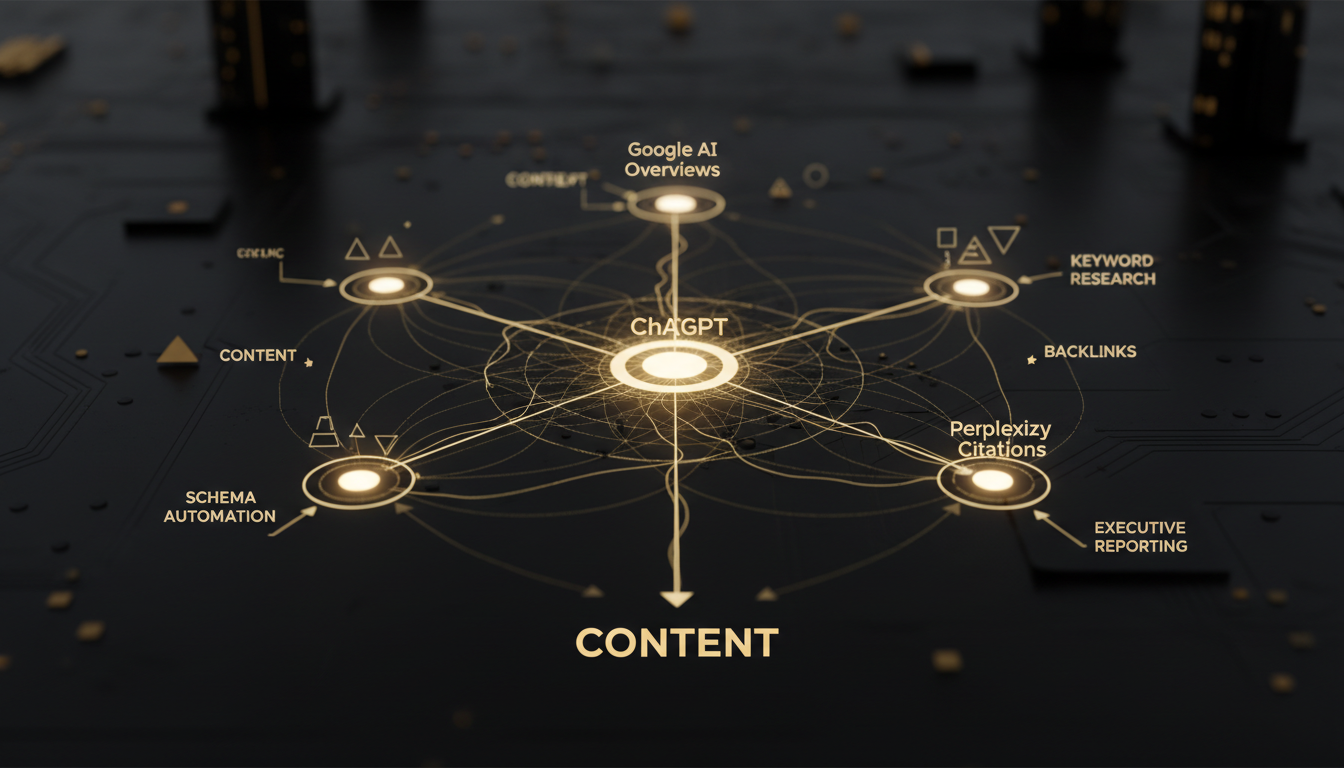
Generative engine optimization is no longer a forward-looking concept — it is the operating reality of search in 2026. Google AI Overviews now appear on a majority of informational queries, ChatGPT Search processes hundreds of millions of requests per month, and Perplexity AI has established itself as a credible research tool for professionals. If your content is not structured to be cited by these systems, you are invisible to a growing share of your target audience before they ever reach a results page.
Quick answer: Generative Engine Optimization (GEO) is the discipline of structuring, writing, and marking up content so that AI-powered search engines — including Google AI Overviews, ChatGPT Search, and Perplexity AI — select and cite it in their synthesized answers. GEO differs from traditional SEO in that the goal is not a ranked blue link but a direct citation inside an AI-generated response. The core levers are authoritative, entity-rich content that answers specific questions completely; structured data (especially FAQPage, Article, and Organization schema); clear E-E-A-T signals; and technical accessibility for AI crawlers. Pages that satisfy these criteria are far more likely to be excerpted by large language models when they construct answers for users.
This guide covers every layer of GEO strategy — from understanding how AI answer engines select sources, to the exact schema types that matter most, to a repeatable workflow you can apply today.
What Is Generative Engine Optimization and Why Does It Matter Now?
Generative Engine Optimization is the practice of making your content the source an AI system chooses to quote. Where traditional SEO asks "will Google rank this page?", GEO asks "will an LLM trust this page enough to cite it?"
The distinction matters because the user journey has changed. A user who types a question into Google in 2026 often receives a fully synthesized paragraph answer at the top of the page — sourced from multiple websites — before seeing any ranked links. A user on ChatGPT or Perplexity may never visit a traditional results page at all. In both cases, the content that gets cited earns the brand impression, the authority signal, and often the click.
How AI Answer Engines Select Sources
Large language models used in search contexts do not rank pages the way PageRank does. They evaluate content for:
- Factual density and specificity — vague content is rarely cited; precise, verifiable claims are preferred
- Structural clarity — headers, lists, and definitions help the model parse and excerpt content accurately
- Entity coherence — content that clearly identifies who, what, where, and when is easier for an LLM to trust
- Crawl accessibility — if a bot cannot read the page, it cannot cite it
Google's AI Overviews draw from the indexed web and apply the same Google helpful content guidance that governs organic rankings, with additional weight on depth and trustworthiness. ChatGPT Search uses OAI-SearchBot and GPTBot — both documented in OpenAI's crawler documentation — to crawl publicly accessible pages in near real time. Perplexity operates its own crawler and favors sources that demonstrate clear expertise and cite evidence.
The Search Generative Experience Is Not Going Away
Google's Search Generative Experience (SGE), now matured into AI Overviews, was the inflection point that made GEO a mandatory discipline rather than an experimental one. The underlying shift is structural: Google has stated that AI-generated summaries are designed to help users get answers faster, not to replace the open web. That means cited sources still receive traffic — but only if they are selected. The competition is now for citation, not just position.
The GEO Content Framework: What AI Systems Actually Want
Write for Entities, Not Just Keywords
Traditional keyword optimization asks you to include a target phrase a certain number of times. GEO asks you to establish the full entity context around a topic. An entity is a clearly defined concept, person, organization, or thing that an AI system can map to its internal knowledge graph.
For a page about a software product, entity context means: what the product is, who makes it, what problem it solves, how it compares to alternatives, and what authoritative sources corroborate those claims. A page that answers all of these questions is far more citable than a page that repeats a keyword phrase.
Practical steps:
- Define every key term the first time it appears
- Name the organizations, tools, and standards you reference
- Use consistent terminology — do not alternate between synonyms for the same concept
- Link to authoritative external sources where they support your claims
Structure Content So an LLM Can Excerpt It
AI systems excerpt content at the paragraph level. A well-structured paragraph that opens with a direct answer, supports it with evidence, and closes with a specific implication is the ideal citation unit. Avoid burying the answer in the middle of a long block of text.
Use this pattern consistently:
- Lead with the answer — state the conclusion first
- Support with specifics — add the evidence, data, or reasoning
- Close with implication — explain why it matters or what to do next
This structure serves both human readers and AI parsers. It also aligns with Google's guidance on generative AI content, which emphasizes that content should demonstrate original value and clear expertise regardless of how it was produced.
Structured Data: The GEO Multiplier
Schema markup is the most direct signal you can send to both traditional search engines and AI answer engines about what your content means. It does not guarantee citation, but it significantly increases the probability that an AI system correctly understands and trusts your content.
The Google Search Central structured data guide provides the canonical reference for implementation. For GEO specifically, prioritize these schema types:
| Schema Type | GEO Benefit | Priority |
|---|---|---|
| FAQPage | Directly maps Q&A content for AI excerpt | High |
| Article / BlogPosting | Establishes content type, author, date | High |
| Organization | Builds entity trust for the publisher | High |
| Person | Author E-E-A-T signal | High |
| BreadcrumbList | Site structure context | Medium |
| HowTo | Step-by-step content for procedural queries | Medium |
| Product | Product entity context for commercial pages | Situational |
Implementing JSON-LD schema correctly and at scale is one of the highest-leverage GEO investments available. The AI schema automation guide on this blog covers how to automate schema generation across large content libraries without manual markup for every page.
E-E-A-T as a GEO Signal
Experience, Expertise, Authoritativeness, and Trustworthiness (E-E-A-T) originated as a quality rater framework for Google's human evaluators. In the GEO context, it functions as a proxy for citation worthiness. AI systems are trained to prefer sources that exhibit these qualities because they correlate with factual accuracy.
What E-E-A-T Looks Like in Practice
- Experience: First-person accounts, case studies, or demonstrated use of the product or method being described
- Expertise: Author credentials surfaced in schema and on-page, accurate technical claims, appropriate depth
- Authoritativeness: Inbound links from recognized sources, brand mentions, consistent publishing history
- Trustworthiness: Accurate claims, cited sources, transparent ownership, no manipulative patterns
For agencies managing multiple client sites, building E-E-A-T systematically — not just on individual pages — is essential. The AI SEO workflow for agencies guide outlines how to operationalize E-E-A-T signals across a client portfolio.
Platform-Specific GEO: Google, ChatGPT, and Perplexity
Getting Cited in Google AI Overviews
Google AI Overviews draw from indexed pages. The selection criteria overlap heavily with organic ranking factors but weight comprehensiveness and direct answerability more heavily. A page that ranks #4 for a query but answers the question more completely than the #1 result may be cited in the AI Overview while the #1 result is not.
The detailed tactical playbook for this is covered in the Google AI Overviews citation guide, but the core requirements are: comprehensive coverage of the topic, FAQPage schema for question-based content, clear author and organization schema, and mobile-accessible page structure.
Getting Cited in ChatGPT Search
ChatGPT Search uses OAI-SearchBot (for real-time retrieval) and GPTBot (for training and indexing). Both are documented in OpenAI's official crawler documentation. To be eligible:
- Allow both bots in your robots.txt
- Ensure pages load without JavaScript-only rendering where possible
- Publish factually accurate, well-sourced content
- Use clear heading structure so the crawler can identify content sections
Getting Cited in Perplexity AI
Perplexity favors sources that read like credible reference material: specific, cited, and free of promotional language. It also surfaces sources visibly to users, which means a citation in Perplexity is a visible brand impression. Write content that could appear in a well-researched report, and Perplexity's crawler is more likely to select it.
GEO Checklist: What to Audit on Every Page
Apply this checklist when evaluating any page for GEO readiness:
- The page answers a specific, real user question directly in the first paragraph
- A concise, self-contained answer appears within the first 250 words
- H2 and H3 headings use natural question or topic phrasing
- FAQPage schema is implemented for any Q&A content
- Article or BlogPosting schema includes author, datePublished, and publisher
- Organization schema is present site-wide
- OAI-SearchBot and GPTBot are allowed in robots.txt
- The page is indexed and crawlable (verify in Google Search Console)
- External sources cited are real and accessible
- Author credentials are surfaced on-page or in schema
- Content is mobile-readable with no intrusive interstitials
- Internal links connect to related authoritative content on the same domain
For content creation, the AI-powered content briefs guide shows how to build briefs that bake GEO requirements in from the start rather than retrofitting them after publication.
What Matters Most: How to Prioritize GEO Efforts
If you are starting from zero or auditing an existing site, prioritize in this order:
- Technical accessibility — AI crawlers cannot cite what they cannot read. Fix crawl blocks first.
- Schema implementation — FAQPage and Article schema have the highest citation impact per hour of effort.
- Content restructuring — Rewrite existing high-traffic pages to lead with direct answers and use clear heading hierarchies.
- E-E-A-T signals — Add author schema, cite sources, and build organizational entity context.
- New content creation — Use AI-powered content briefs to produce GEO-optimized content at scale.
The Black & Gold SEO platform features include schema automation, content optimization, and technical auditing modules designed to execute this prioritization systematically across an entire site or client portfolio.
Frequently Asked Questions
What is Generative Engine Optimization (GEO)?
Generative Engine Optimization (GEO) is the practice of structuring, writing, and marking up content so that AI-powered search engines — such as Google AI Overviews, ChatGPT Search, and Perplexity — select and cite it in their generated answers. Unlike traditional SEO, which targets ranked blue links, GEO targets the AI layer that synthesizes answers before a user ever clicks.
How is GEO different from traditional SEO?
Traditional SEO optimizes pages to rank in a list of blue links based on signals like backlinks and keyword relevance. GEO optimizes content to be quoted or cited inside an AI-generated answer. GEO prioritizes authoritative, clearly structured, entity-rich content that large language models can parse, trust, and excerpt accurately.
How do I get my content cited in Google AI Overviews?
To appear in Google AI Overviews, publish comprehensive, people-first content that directly answers specific questions, implement relevant schema markup (FAQ, Article, HowTo where applicable), demonstrate clear E-E-A-T signals such as author credentials and cited sources, and ensure your pages are crawlable and indexed. Google's helpful content guidance confirms that accuracy, depth, and trustworthiness are the primary selection criteria.
Does ChatGPT crawl my website for search answers?
Yes. ChatGPT uses OAI-SearchBot and GPTBot to crawl publicly accessible web pages. To be eligible for citation in ChatGPT Search responses, allow these bots in your robots.txt, publish factually accurate and well-structured content, and avoid blocking OpenAI's crawlers. OpenAI's official crawler documentation details the user-agent strings and crawl behavior.
What schema markup is most important for GEO in 2026?
The highest-impact schema types for GEO are FAQPage (for question-and-answer content), Article or BlogPosting (for editorial content), Organization and Person (for E-E-A-T entity signals), and BreadcrumbList (for site structure). Implementing JSON-LD structured data following Google's structured data guide helps AI systems understand content context and increases citation eligibility.
Sources and Further Reading
- Google helpful content guidance
- Google Search Central structured data guide
- OpenAI crawler documentation
- Google guidance on generative AI content
The most practical next step is a GEO audit of your five highest-traffic pages: check crawler accessibility, add or validate FAQPage and Article schema, and rewrite the opening paragraph of each page to lead with a direct, self-contained answer. Those five pages represent your fastest path to AI citation — and the framework scales from there across your entire site.
← All posts