Do You Need an llms.txt File for AI Search Visibility in 2026?
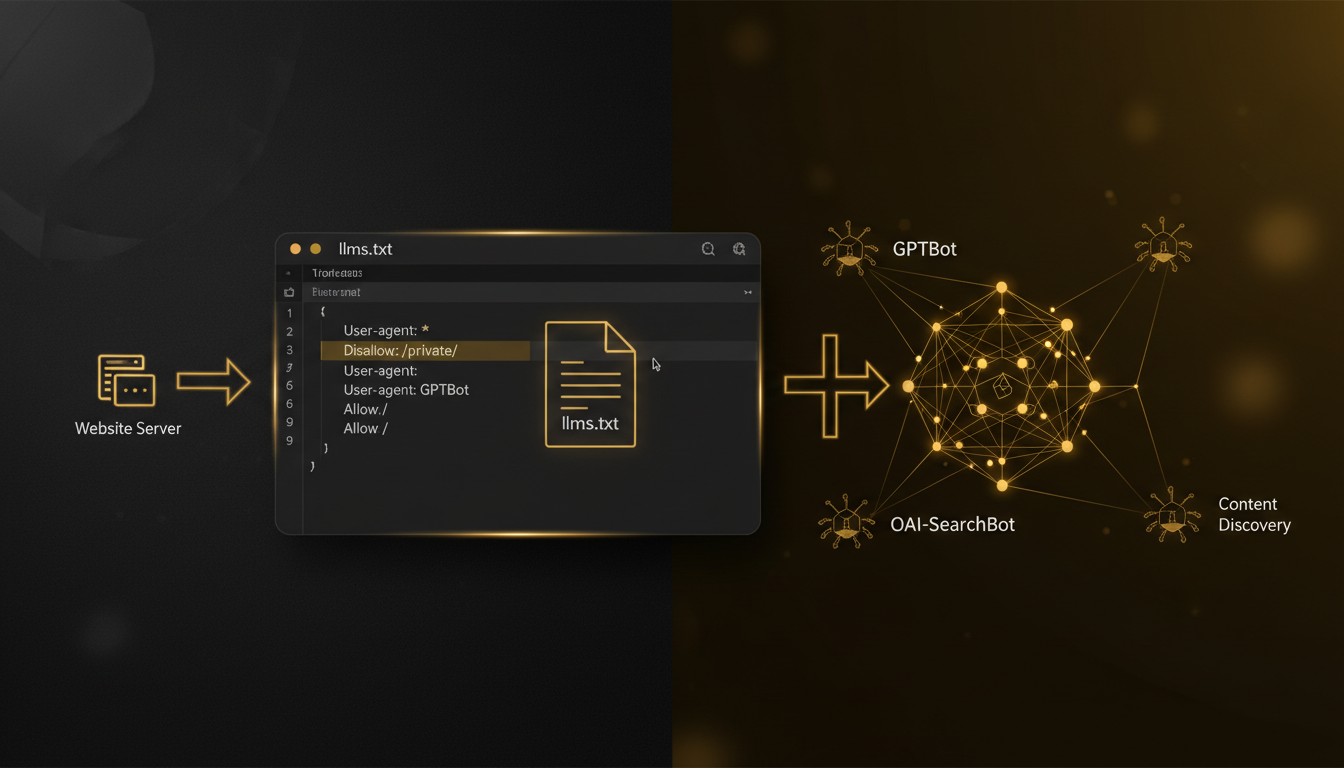
If you manage SEO for clients or run a content-heavy site, the question of whether you need an llms.txt file for AI search visibility is showing up in every strategy conversation heading into 2026. The short answer is: not strictly required, but increasingly worth implementing. Here is what the file actually does, where it fits in your broader AI search strategy, and how to decide whether to prioritize it.
Quick answer: An llms.txt file is a plain-text file placed at your domain root (e.g., yourdomain.com/llms.txt) that signals to large language model crawlers which content they are permitted or preferred to read. It works alongside—not instead of—robots.txt. As of 2026, crawlers like OpenAI's GPTBot and OAI-SearchBot are the primary audiences. Adoption across AI systems is uneven, and the file is not a confirmed ranking factor for Google AI Overviews or Perplexity. Its value lies in proactive content governance, clear permission signaling, and positioning your site ahead of a standard that is still maturing. Implementation is low-effort and carries no downside risk when done correctly.
What Is an llms.txt File, Really?
The llms.txt convention emerged from the AI developer community as a lightweight way to communicate content intent to AI ingestion pipelines. Think of it as a README for language model crawlers—a structured, human-readable file that tells AI systems what your site contains, what you want indexed, and what you want excluded from training or retrieval.
Unlike robots.txt, which uses a formal directive syntax enforced by most crawlers, llms.txt is currently a community-driven proposal rather than a ratified standard. Its format typically includes:
- A brief description of the site and its purpose
- Links to key content sections or sitemaps
- Optional permission statements about training versus retrieval use
- Notes on content freshness or licensing
The file lives at yourdomain.com/llms.txt and is publicly accessible. Some implementations also include a more detailed llms-full.txt variant with expanded content summaries.
How It Relates to robots.txt
robots.txt remains the foundational crawl-control file. It is universally respected by traditional search engine bots and, critically, by AI crawlers including GPTBot and OAI-SearchBot. According to OpenAI crawler documentation, OpenAI's bots honor robots.txt disallow directives before any other signal. llms.txt is a complementary layer—it does not override robots.txt, and it does not give you enforcement power over crawlers that choose to ignore it.
The practical relationship looks like this:
| File | Primary Purpose | Enforcement | AI Crawler Support |
|---|---|---|---|
| robots.txt | Block or allow crawl access | Broadly enforced | GPTBot, OAI-SearchBot, Googlebot, most others |
| llms.txt | Signal content intent and permissions to LLMs | Voluntary/advisory | GPTBot, OAI-SearchBot (partial), others vary |
| Structured data schema | Communicate entity meaning to search and AI systems | Interpreted, not enforced | Google, Bing, AI answer engines |
| Sitemap.xml | Guide crawl prioritization | Broadly respected | All major crawlers |
Where GPTBot and OAI-SearchBot Fit In
OpenAI operates two relevant crawlers. GPTBot is used for training data collection. OAI-SearchBot powers ChatGPT's real-time web retrieval features. Both respect robots.txt. Both are beginning to acknowledge llms.txt signals in some pipeline configurations, though OpenAI has not published a formal specification committing to full llms.txt compliance. This distinction matters: blocking GPTBot in robots.txt prevents training use; llms.txt gives you a softer, more nuanced layer of guidance on top of that.
Does llms.txt Actually Affect AI Search Visibility?
This is where the conversation gets more nuanced, and where many posts overstate the case.
Google AI Overviews: Not a Direct Factor
Google AI Overviews are generated from Google's own crawl index. The signals that influence whether your content gets cited in an AI Overview are the same signals that drive traditional organic performance: E-E-A-T, structured data, content quality, and entity clarity. An llms.txt file is not a confirmed Google citation factor. If improving your presence in Google AI Overviews is a priority, your effort is better spent on schema markup, authoritative sourcing, and clear entity definitions than on llms.txt alone.
The Google helpful content guidance makes no mention of llms.txt, which is consistent with Google's position that its AI systems rely on its own crawl and quality signals.
Perplexity AI and Retrieval-Augmented Systems
Perplexity AI uses its own crawler (PerplexityBot) and retrieval pipeline. As of 2026, Perplexity does not have a published llms.txt specification. Its citation decisions are driven by content quality, freshness, and topical authority—not by the presence of an llms.txt file. That said, Perplexity does respect robots.txt, so your crawl-control hygiene there matters more immediately.
Where llms.txt Does Add Value
The genuine value of llms.txt in 2026 falls into three categories:
- Content governance: It creates an explicit, auditable record of your AI content permissions—useful for legal clarity as AI training and licensing disputes evolve.
- Forward positioning: As the standard matures and more AI systems adopt it, sites that already have a well-structured file will require no catch-up work.
- Developer and enterprise trust signals: Technical audiences, API consumers, and enterprise partners increasingly check for llms.txt as a signal of AI-readiness and content transparency.
How to Implement llms.txt Without Wasting Time
What Matters Most (Decision Framework)
Before implementing, run this quick check:
- Do you have a robots.txt file that correctly handles GPTBot and OAI-SearchBot? If not, start there.
- Do your key pages have structured data schema implemented? Schema has a higher confirmed impact on AI retrieval than llms.txt.
- Is your content structured for Generative Engine Optimization (GEO)—meaning clear entity definitions, concise answer passages, and authoritative sourcing?
If those foundations are solid, llms.txt is a logical next step. If they are not, llms.txt should wait.
A Minimal Viable llms.txt
A functional file does not need to be complex. A minimal structure includes:
# Site name and one-sentence description## Allowed— list of content sections or URLs you want AI systems to prioritize## Disallowed— content you want excluded from training (e.g., client data, gated content)## Notes— licensing terms, content freshness notes, or contact information for licensing inquiries
Keep it under 500 lines. Plain text, UTF-8 encoded, served at the root with a text/plain content type.
Pair It With a Technical SEO Audit
Implementing llms.txt in isolation misses the bigger picture. A technical SEO audit will surface crawl issues, indexing gaps, and robots.txt conflicts that have a far larger impact on AI search visibility than any single file. Use the audit to confirm that your crawl permissions are consistent across robots.txt, your sitemap, and any new llms.txt directives.
The Google Search Central structured data guide remains the authoritative reference for schema implementation, which continues to outperform llms.txt in terms of confirmed AI retrieval impact.
AI Search Visibility Checklist for 2026
Use this before deciding where llms.txt ranks in your priority queue:
- robots.txt is correctly configured and tested for GPTBot and OAI-SearchBot
- Sitemap.xml is current and submitted to Google Search Console and Bing Webmaster Tools
- Key pages have Article, FAQ, HowTo, or Organization schema implemented
- Content is written with clear entity definitions and concise answer passages (GEO-optimized)
- E-E-A-T signals are present: author attribution, sourcing, clear expertise indicators
- Page speed and Core Web Vitals meet mobile-first thresholds
- Internal linking connects topically related content clusters
- llms.txt file is created, validated, and consistent with robots.txt permissions
Frequently Asked Questions
What is an llms.txt file and what does it do?
An llms.txt file is a plain-text file placed at the root of a website (e.g., yourdomain.com/llms.txt) that provides structured guidance to large language model crawlers about which content they are permitted or preferred to read. It is conceptually similar to robots.txt but designed specifically for AI ingestion pipelines rather than traditional search engine crawlers.
Do AI search engines like ChatGPT and Perplexity actually read llms.txt?
As of 2026, adoption is uneven. OpenAI's GPTBot and OAI-SearchBot follow robots.txt directives and have begun acknowledging llms.txt signals in some pipelines, but there is no universal standard enforced across all AI systems. Perplexity, Google, and Anthropic each use their own crawler policies. llms.txt is a best-practice signal, not a guaranteed control mechanism.
Is llms.txt more important than robots.txt for AI visibility?
No. robots.txt remains the primary and most universally respected crawl-control file across both traditional and AI crawlers. llms.txt is a complementary, emerging convention that helps AI systems understand content intent and permissions, but it does not replace robots.txt. Both should be maintained together.
Will adding an llms.txt file improve my rankings in Google AI Overviews?
Not directly. Google AI Overviews primarily rely on Google's own crawl index, structured data, E-E-A-T signals, and helpful content quality. An llms.txt file is not a confirmed Google ranking or citation factor. To improve AI Overview citations, focus on schema markup, authoritative content, and clear entity definitions.
Should SEO agencies implement llms.txt for their clients in 2026?
Yes, as a low-effort, forward-looking best practice. Implementing a well-structured llms.txt file takes minimal time, signals content permissions clearly to AI crawlers that do read it, and positions client sites ahead of the curve as the standard matures. Pair it with structured data, GEO-optimized content, and proper robots.txt hygiene for maximum AI search visibility.
Sources and Further Reading
- OpenAI crawler documentation
- Google helpful content guidance
- Google Search Central structured data guide
The practical next step is straightforward: audit your robots.txt and schema implementation first, then add a minimal llms.txt file that mirrors your existing crawl permissions. Explore the Black & Gold SEO guides for structured walkthroughs on GEO, schema automation, and AI-ready content architecture—because llms.txt file AI search visibility is only one piece of a complete AI search strategy, and the foundations matter far more than the file itself.
Related Reading
- Generative Engine Optimization Geo Complete Guide
- Google Ai Overviews Get Cited
- Ai Schema Automation Seo Content Search Engines Ai Answer Engines
- How To Use Ai For Technical Seo Audits