How to Build an SEO Client Onboarding Process That Scales
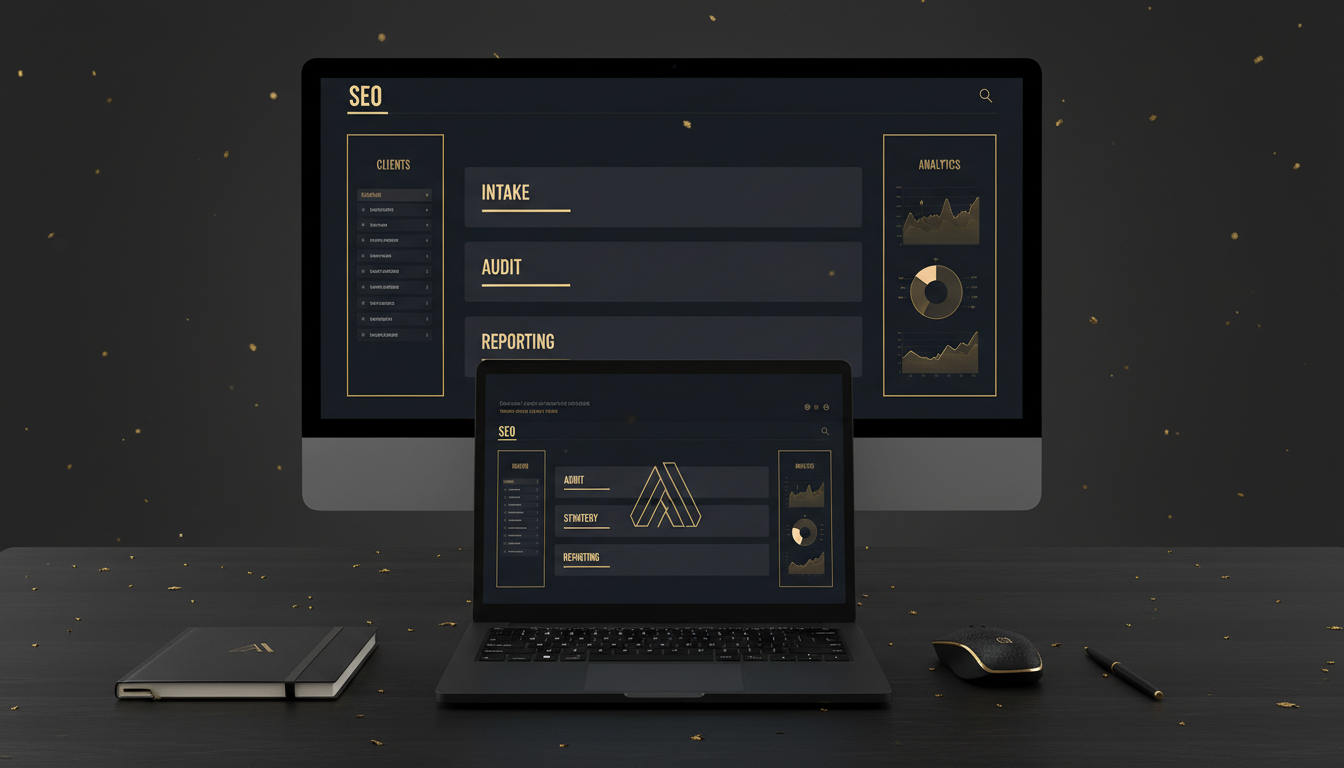
A well-designed SEO client onboarding process is the difference between an agency that retains clients for years and one that churns through them every quarter. Yet most agencies treat onboarding as an afterthought—a loose collection of emails, spreadsheets, and access requests that vary from client to client. The result is inconsistent delivery, misaligned expectations, and a team that reinvents the wheel every time a new contract is signed.
Quick answer: A scalable SEO client onboarding process has six core phases: discovery intake, access collection, baseline technical SEO audit, keyword and competitor research, strategy documentation, and reporting cadence setup. Each phase should be templated and, where possible, automated. With an AI SEO platform handling the audit, keyword research, schema recommendations, and executive report generation, agencies can compress a two-week onboarding into 48–72 hours of active work—without sacrificing the strategic depth clients are paying for. The biggest risk is skipping the baseline audit; without it, KPIs are set on guesswork, and early churn follows.
Why Most Agency Onboarding Processes Break Under Scale
When an agency manages three or four SEO clients, informal onboarding is survivable. A senior strategist holds the process in their head. Deliverables get done, more or less on time. But add a fifth, sixth, or tenth client, and the cracks appear fast.
The core problem is tool fragmentation. A typical agency might use one tool for technical audits, another for keyword research, a third for content briefs, a fourth for reporting, and a fifth for schema. Each new client means running the same multi-tool gauntlet from scratch. Time that should go into strategy goes into data wrangling.
The second problem is inconsistency. When onboarding depends on individual memory rather than documented process, quality varies by account manager. A client who gets your best strategist has a different experience than one who gets someone newer. That inconsistency is invisible to leadership until a client complains or churns.
Fixing both problems requires the same solution: a standardized, documented, partially automated onboarding workflow built on a platform that consolidates the tools.
The Six-Phase SEO Client Onboarding Process
Phase 1: Discovery Intake
Before any technical work begins, collect structured information from the client. A discovery intake form should capture business goals, target audience, primary competitors, existing content assets, past SEO history (penalties, migrations, previous agencies), and the internal stakeholders who will receive reports.
This is not a casual kickoff call. It is a structured document that feeds every subsequent phase. Build it as a form—not a free-text email thread—so the answers are consistent and searchable across clients.
Phase 2: Access Collection
Create a standardized access checklist. Every SEO engagement needs Google Analytics 4, Google Search Console, CMS admin access, and hosting or DNS access for technical changes. Some clients also need CRM access for conversion data.
Send this checklist on day one, in parallel with the intake form. Waiting for access is the single biggest source of onboarding delay. Chasing it reactively adds days; sending a clear checklist proactively eliminates the wait.
Phase 3: Baseline Technical SEO Audit
This is the most consequential phase and the one most agencies rush or skip. A baseline technical SEO audit establishes the site's current health: crawlability, indexation, Core Web Vitals, structured data coverage, internal linking, duplicate content, and mobile usability.
The Google SEO Starter Guide outlines the foundational signals that affect how Google crawls and ranks a site—all of which should be checked at this stage. Without a documented baseline, you cannot measure progress, and you cannot set honest KPIs.
AI-powered audit tools have made this phase dramatically faster. What once required a senior technical SEO spending a full day in a crawl tool can now be completed in hours, with prioritized issue lists generated automatically. See how to use AI for technical SEO audits for a detailed walkthrough of what that process looks like in practice.
Phase 4: Keyword and Competitor Research
Once the technical baseline is established, map the keyword landscape. This means identifying target keywords by intent cluster, analyzing competitor rankings and content gaps, and prioritizing opportunities based on difficulty, volume, and business relevance.
The output of this phase is not a raw keyword list. It is a prioritized opportunity map that connects search demand to the client's business goals. This document becomes the foundation of the 90-day strategy.
Phase 5: Strategy Documentation
Synthesize the intake data, audit findings, and keyword research into a 90-day strategy document. This should include:
- Priority technical fixes with estimated impact
- Target keyword clusters for the first content sprint
- Content brief outlines for the first three to five pieces
- Schema markup opportunities identified during the audit
- KPIs tied to business goals, not vanity metrics
Schema automation is worth calling out here specifically. Identifying and implementing structured data manually is time-consuming and error-prone. Platforms that automate schema recommendations during the audit phase save hours per client and improve the quality of structured data coverage from day one.
Phase 6: Reporting Cadence Setup
Before the first deliverable goes out, establish how reporting will work. This means choosing a reporting frequency (weekly, biweekly, monthly), defining the metrics that matter to this client's stakeholders, and building the executive dashboard.
Executive SEO reporting is a skill separate from SEO itself. Clients do not want raw crawl data. They want to see organic traffic trends, keyword movement, conversion attribution, and a clear narrative connecting SEO activity to business outcomes. Building this dashboard during onboarding—not three months in—sets the professional tone for the entire engagement. The guide on how to build client-ready SEO reports executives read covers the structure in detail.
What Matters Most: Evaluating Your Current Onboarding Workflow
If you are assessing your existing process or building one from scratch, use this framework to identify gaps:
| Onboarding Element | Manual Process Risk | Automation Opportunity |
|---|---|---|
| Discovery intake | Inconsistent data collection | Standardized form with conditional logic |
| Access collection | Delays from ad hoc requests | Templated checklist sent day one |
| Technical SEO audit | Time-intensive, varies by analyst | AI audit platform with prioritized output |
| Keyword research | Tool-switching, manual export | Integrated keyword research within audit platform |
| Content briefs | Written from scratch each time | AI-generated briefs from keyword clusters |
| Schema recommendations | Manual identification | Automated schema audit and markup suggestions |
| Executive reporting | Built manually per client | Pre-built dashboard templates, auto-populated |
The goal is not to remove human judgment. It is to remove the manual, repeatable tasks that consume time without adding strategic value. Strategists should be spending their onboarding hours on client communication, expectation setting, and strategy—not exporting CSVs.
For agencies managing multiple clients simultaneously, automating SEO reporting across multiple clients is one of the highest-leverage changes you can make to your workflow.
How AI Platforms Compress the Onboarding Timeline
A traditional onboarding timeline looks like this: intake and access (days 1–3), technical audit (days 4–7), keyword research (days 8–10), strategy document (days 11–14). Two weeks, minimum, before the client sees a deliverable.
With an AI SEO platform that consolidates audits, keyword research, content briefs, schema automation, and reporting into a single workflow, the timeline compresses significantly. The audit and keyword research phases can run in parallel and complete within 24–48 hours. Content briefs are generated from the keyword clusters rather than written from scratch. The executive onboarding report is assembled from audit data rather than manually formatted.
This is not about cutting corners. It is about redirecting effort. The time saved on data gathering goes into the strategy document and the client kickoff conversation—the parts of onboarding that actually require human expertise.
The AI SEO workflow for agencies guide covers how to structure this end-to-end, and the best SEO software for agencies roundup evaluates platforms by how well they support this consolidated approach.
Google's helpful content guidance is also worth reviewing during the strategy phase—particularly when setting content priorities for clients in competitive niches where quality signals matter more than volume.
SEO Client Onboarding Checklist
Use this as a starting point for your agency's standardized process:
- Send discovery intake form on contract signature
- Send access collection checklist on day one
- Confirm GA4, GSC, CMS, and DNS access before audit begins
- Run baseline technical SEO audit and export prioritized issue list
- Complete keyword and competitor research with intent clustering
- Document top 10 technical fixes with estimated impact
- Build 90-day content and keyword strategy document
- Generate content briefs for first sprint
- Identify schema markup opportunities from audit
- Build executive reporting dashboard before first deliverable
- Schedule kickoff call to walk through strategy document
- Confirm reporting cadence and stakeholder contacts
Frequently Asked Questions
What should be included in an SEO client onboarding process?
A complete SEO client onboarding process should include a discovery intake form, access collection (GA4, GSC, CMS), a baseline technical SEO audit, keyword and competitor research, goal-setting and KPI alignment, a 90-day strategy document, and a reporting cadence setup—all documented in a repeatable checklist.
How long does SEO client onboarding typically take?
Most agencies complete SEO client onboarding in 1–2 weeks. With AI-powered audit and reporting tools, the technical audit and initial keyword research phases can be compressed to 24–48 hours, letting strategists focus on client communication and strategy rather than data gathering.
How do you scale SEO onboarding across multiple clients at once?
Scaling SEO onboarding requires standardized intake templates, automated technical audits, AI-generated content briefs, and pre-built reporting dashboards. Platforms that consolidate audits, keyword research, schema, and reporting into one workflow eliminate the tool-switching that slows agencies down as client volume grows.
What is the biggest mistake agencies make during SEO client onboarding?
The most common mistake is skipping a structured baseline audit before setting expectations. Without a technical audit and keyword gap analysis at the start, agencies set KPIs on incomplete data, which leads to misaligned expectations and early client churn.
Can AI tools help automate parts of the SEO onboarding process?
Yes. AI SEO platforms can automate the technical site audit, generate keyword research reports, produce content briefs, apply schema markup recommendations, and create executive-ready onboarding reports—reducing manual onboarding time by 60–80% compared to stitching together separate tools.
Sources and Further Reading
The most practical next step is to audit your current onboarding workflow against the six-phase checklist above. Identify which phases are undocumented, which rely on individual memory rather than templates, and which involve manual work that a platform could handle. Start there. A scalable SEO client onboarding process is not built all at once—it is built by systematically replacing the weakest link in the chain, one phase at a time.
← All posts