E-E-A-T Optimization: A Practical Guide for Agencies and Site Owners
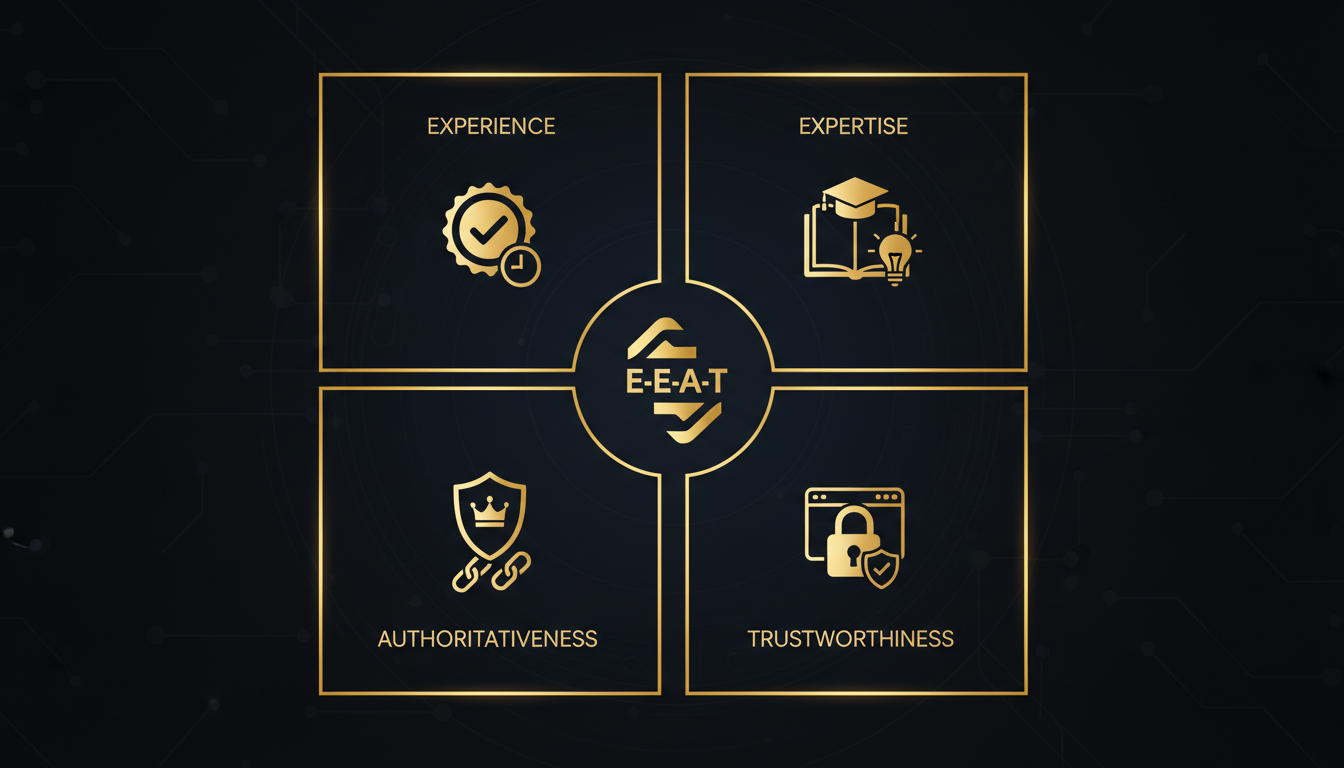
E-E-A-T optimization is no longer a soft signal you can defer to "later." As Google's Helpful Content System matures and AI-generated answers increasingly surface in search results, the four pillars—Experience, Expertise, Authoritativeness, and Trustworthiness—have become the structural foundation of durable organic visibility. Whether you manage a single site or a portfolio of client properties, understanding how to audit and strengthen these signals is now a core SEO competency.
Quick answer: E-E-A-T optimization means systematically strengthening the signals Google uses to evaluate whether a page deserves to rank: real-world experience demonstrated in the content, verifiable author credentials, authoritative third-party references, and transparent trust signals like clear contact information, HTTPS, and accurate structured data. Practically, this involves adding Person and Organization schema, writing substantive author bios, earning editorial backlinks, keeping content factually current, and publishing trust pages (About, Contact, Privacy). Sites that do this consistently rank better in traditional search and are more likely to be cited in AI Overviews and other generative answer engines.
What E-E-A-T Actually Means (and What It Doesn't)
E-E-A-T is not a ranking algorithm you can game with a checklist. It is a framework drawn from Google's Search Quality Rater Guidelines—the document human raters use to evaluate search quality—that describes the characteristics of pages Google wants to surface. The four dimensions work together:
- Experience — Has the author demonstrably done the thing they're writing about? First-person accounts, original data, and case-specific detail signal this.
- Expertise — Does the author have the knowledge depth the topic requires? Credentials, professional affiliations, and consistent topical coverage matter here.
- Authoritativeness — Do other credible sources reference or link to this content? Editorial backlinks and brand mentions are the primary signals.
- Trustworthiness — Is the site transparent, accurate, and safe? HTTPS, clear ownership, accurate claims, and visible contact information all contribute.
The addition of the first "E" (Experience) in 2022 was significant. It shifted the standard from "does this person know the subject?" to "have they actually lived or practiced it?" That distinction matters enormously for YMYL (Your Money or Your Life) topics like health, finance, and legal content, but it increasingly applies across all verticals.
How to Audit E-E-A-T Signals Across a Site
Start with a Technical SEO Audit
Before addressing content-level signals, confirm the technical foundation is sound. A technical SEO audit should verify HTTPS implementation, crawlability, Core Web Vitals, and mobile usability—all of which feed into the trustworthiness dimension. A site that loads slowly on mobile or throws mixed-content warnings undermines trust before a user reads a single word.
For agencies managing multiple clients, the audit scope needs to scale. An AI-powered platform can flag missing schema, thin author bios, and absent trust pages across an entire portfolio in a single pass—turning what would be a multi-day manual process into an actionable report.
Evaluate Author and Organization Signals
Run through this checklist for every content-producing page:
- Author name is displayed and links to a bio page
- Bio page includes credentials, professional history, and relevant first-hand experience
- Bio page links to verifiable external profiles (LinkedIn, industry publications)
- Person schema is implemented and references the author's name, URL, and sameAs properties
- Organization schema is present on the homepage with accurate name, URL, logo, and contact details
- Article or BlogPosting schema links the content to its author entity
Missing any of these doesn't mean a page will fail to rank, but it leaves signals on the table that competitors with complete markup will capture.
Assess Content Accuracy and Freshness
Outdated content is a trust liability. Pages that cite statistics from several years ago, reference discontinued products, or make claims that have since been contradicted signal low trustworthiness to both human raters and AI systems. Build a content review cadence into your workflow—quarterly for evergreen pages, monthly for fast-moving topics.
Structured Data: The Machine-Readable Layer of E-E-A-T
Structured data is how you communicate E-E-A-T signals in a format Google can parse without inference. The Google Search Central structured data guide outlines the schema types that directly support authorship and entity clarity.
The most impactful schema types for E-E-A-T are:
| Schema Type | E-E-A-T Dimension | What It Communicates |
|---|---|---|
| Person | Experience, Expertise | Author identity, credentials, sameAs profiles |
| Organization | Trustworthiness | Brand identity, contact info, logo |
| Article / BlogPosting | Authoritativeness | Links content to author and publisher |
| BreadcrumbList | Trustworthiness | Site structure and topical hierarchy |
| FAQPage | Expertise | Structured answers AI systems can quote |
Implementing these with accurate, verifiable data—not fabricated credentials or placeholder text—is what makes the markup meaningful. Schema that contradicts the visible page content can trigger manual quality review.
For teams that need to deploy schema at scale without hand-coding every page, AI schema automation dramatically reduces implementation time while maintaining accuracy.
E-E-A-T and Generative Engine Optimization
Why AI Systems Favor E-E-A-T-Strong Content
Google's helpful content guidance and its guidance on generative AI content both emphasize that content should demonstrate genuine expertise and serve readers—not search engines. This alignment is not coincidental. The same signals that satisfy human quality raters are the signals AI retrieval systems use to decide what to quote.
Google AI Overviews, in particular, pull from pages that have clear authorship, factual specificity, and structured formatting. A page with a named expert author, accurate claims, and properly implemented Article schema is structurally more quotable than an anonymous page with no schema and vague assertions. If your goal is to get cited in Google AI Overviews, E-E-A-T optimization is the prerequisite, not an optional add-on.
Writing Content That AI Systems Can Quote
The formatting choices that support E-E-A-T also support Generative Engine Optimization (GEO). Concise definitions, question-based headings, comparison tables, and self-contained answer passages all make content easier for AI systems to extract and attribute. This isn't about gaming AI—it's about writing with enough precision and structure that your content becomes the authoritative source on a topic.
Building E-E-A-T Into Your Content Production Workflow
Use Content Briefs That Encode Authority Requirements
A content brief that only covers keyword targets and word count misses the E-E-A-T layer entirely. Briefs should specify the required author expertise level, the first-hand experience angle, the claims that need sourcing, and the schema types to implement. AI-powered content briefs can pre-populate these requirements based on the topic's YMYL sensitivity and competitive landscape.
What Matters Most: The Agency Decision Framework
When prioritizing E-E-A-T improvements across a client portfolio, sequence work in this order:
- Highest impact, lowest effort: Add or fix Person and Organization schema; publish or update author bio pages; add HTTPS if missing
- High impact, moderate effort: Audit and update factually stale content; add trust pages (About, Contact, Privacy Policy)
- High impact, higher effort: Earn editorial backlinks from authoritative publications; develop original research or data assets
- Ongoing: Maintain content freshness cadence; monitor for new schema opportunities; track AI Overview citation rates
This sequencing ensures quick wins ship first while longer-term authority-building runs in parallel.
Frequently Asked Questions
What is E-E-A-T and why does it matter for SEO?
E-E-A-T stands for Experience, Expertise, Authoritativeness, and Trustworthiness. Google's Search Quality Rater Guidelines use these four dimensions to evaluate whether a page deserves to rank. Sites that demonstrate real-world experience, credible authorship, authoritative backlinks, and transparent trust signals consistently perform better in both traditional search and AI-generated answers.
How do I improve E-E-A-T signals on my website?
Start with author bios that include credentials, social profiles, and first-hand experience. Add structured data (Person, Organization, Article schema) so Google can parse authorship. Earn editorial backlinks from authoritative sources, publish accurate and regularly updated content, display clear contact information, and use HTTPS with a visible privacy policy.
Does E-E-A-T affect AI Overviews and generative search results?
Yes. AI systems like Google AI Overviews and ChatGPT prefer to cite sources that demonstrate clear authorship, factual accuracy, and trustworthiness—all core E-E-A-T signals. Optimizing for E-E-A-T directly improves your chances of being quoted in AI-generated answers.
How can agencies audit E-E-A-T for multiple client sites efficiently?
Use a structured checklist covering author markup, schema completeness, backlink authority, content accuracy, and trust-page presence (About, Contact, Privacy). An AI-powered SEO audit platform can flag missing Person or Organization schema, thin author bios, and missing trust signals across an entire client portfolio in one pass.
What schema markup supports E-E-A-T optimization?
The most impactful schema types for E-E-A-T are Person (for author credentials), Organization (for brand identity and contact details), Article or BlogPosting (linking author to content), and BreadcrumbList (for site structure clarity). Implementing these with accurate, verifiable data signals to Google that your content has identifiable, credible ownership.
Sources and Further Reading
- Google helpful content guidance
- Google guidance on generative AI content
- Google Search Central structured data guide
The most practical next step: run a structured E-E-A-T audit on your highest-traffic pages this week. Check for author schema, verify bio page completeness, confirm Organization schema is live on the homepage, and identify any content that hasn't been reviewed in the past six months. Those four actions alone will close the most common E-E-A-T gaps—and put your pages in a stronger position for both traditional rankings and AI citation.
← All posts