How to Build an SEO Silo Structure That Boosts Topical Authority and Crawl Efficiency
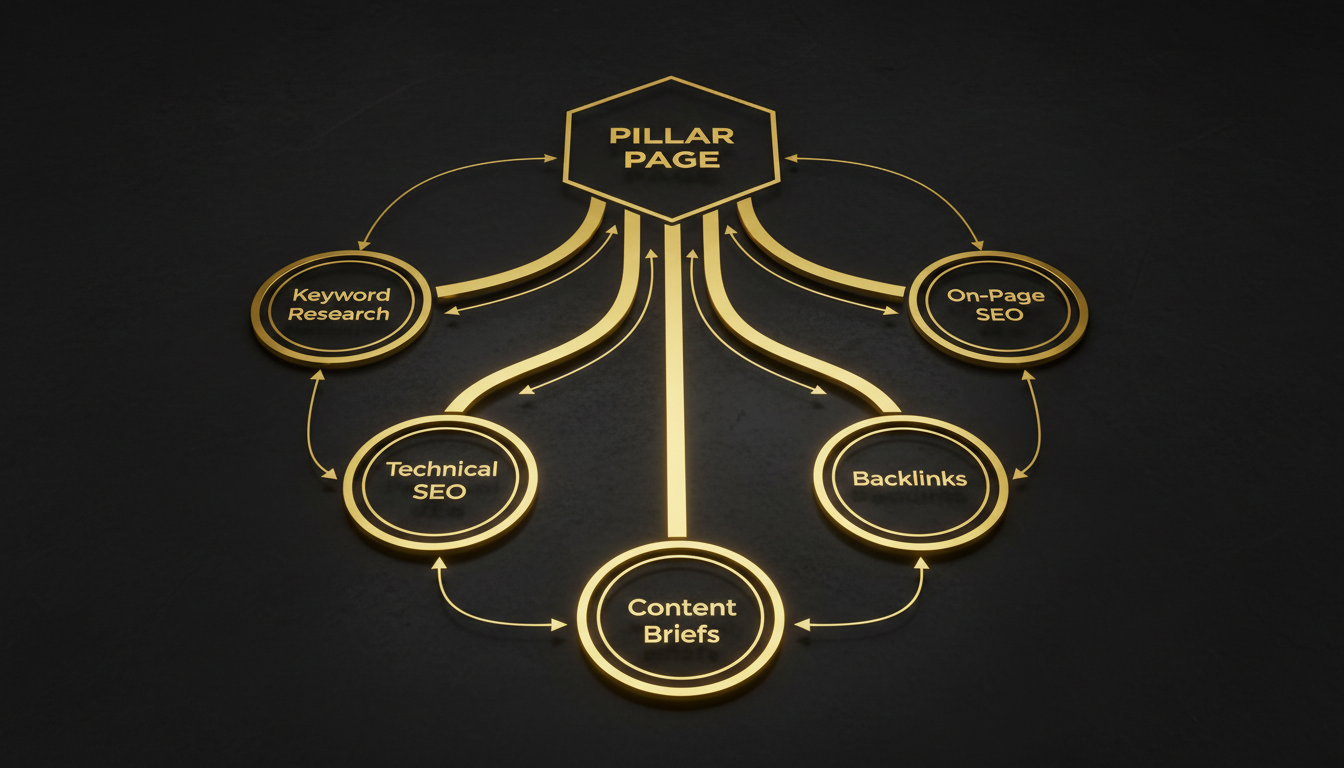
A well-designed SEO silo structure is one of the highest-leverage technical decisions you can make for a website. It shapes how search engines crawl your content, how they interpret your expertise, and ultimately how well individual pages rank for competitive queries. Done right, it turns a scattered collection of blog posts into a coherent knowledge architecture that signals deep topical authority.
Quick answer: An SEO silo structure is a site architecture method that groups related content into themed sections — each anchored by one pillar page and supported by multiple cluster pages connected through strategic internal links. This approach concentrates topical relevance signals, reduces crawl depth so Googlebot can reach important pages faster, and helps search engines understand the full scope of your expertise on a subject. A typical silo contains one pillar page and 5–15 cluster pages. The result is stronger rankings across the entire topic group, not just individual pages. It is the architectural implementation of a topic cluster strategy, and it is foundational to modern on-page SEO.
Why Site Architecture Still Matters for SEO
Many SEOs focus almost entirely on content quality and backlinks while treating site architecture as an afterthought. That is a strategic mistake. The Google SEO Starter Guide explicitly notes that a clear site structure helps Google understand what your site is about and find all your content efficiently.
Architecture affects three things simultaneously:
- Crawl efficiency — how quickly and completely Googlebot discovers your pages
- Link equity distribution — how PageRank flows through your site
- Topical authority signals — how clearly you demonstrate expertise on a subject
An SEO silo structure addresses all three at once, which is why it remains one of the most durable tactics in technical SEO regardless of algorithm updates.
What Makes a Silo Structure Different from a Flat Architecture
In a flat architecture, pages exist at roughly the same depth with no clear thematic grouping. A blog with 200 posts on loosely related topics, each linked only from a chronological archive, is a flat architecture. Googlebot can crawl it, but it cannot easily determine which pages represent your core expertise.
A silo structure imposes deliberate hierarchy:
- Homepage — links to each silo's pillar page
- Pillar page — a comprehensive, authoritative page on a broad topic
- Cluster pages — individual posts or pages covering subtopics, long-tail queries, and supporting content, each linking back to the pillar
This hierarchy creates what SEOs call "crawl depth" reduction. Pages that are only two or three hops from the homepage get crawled more frequently and indexed faster. According to Google sitemap guidance, sitemaps help Google discover URLs, but internal link structure determines how crawl budget is allocated in practice.
How to Build an SEO Silo Structure Step by Step
Step 1: Define Your Silos Through Keyword Research
Before you build anything, you need to know which topic groups are worth creating silos around. This is not about picking your favorite subjects — it is about identifying clusters of search demand that align with your business goals.
Start with seed keywords for each potential silo. Then expand into subtopics, long-tail variations, and question-based queries. Each cluster of semantically related queries with meaningful search volume is a candidate silo. If you are doing this at scale, AI keyword research tools can surface high-intent subtopics that manual research misses, particularly in competitive niches where obvious queries are already saturated.
A useful test: if you can write 5–15 genuinely useful, non-overlapping pages on a topic, it is probably deep enough to warrant its own silo.
Step 2: Build or Designate Your Pillar Pages
The pillar page is the cornerstone of each silo. It should:
- Cover the broad topic comprehensively at a strategic level
- Target a high-volume, moderately competitive head keyword
- Link out to every cluster page within the silo
- Be long enough to be genuinely useful, but not so exhaustive that it cannibalizes cluster pages
A good pillar page answers the "what and why" of a topic. Cluster pages answer the "how" for specific subtopics. This division of scope is what prevents keyword cannibalization within the silo.
AI-powered content briefs are particularly useful at this stage because they help you define the exact scope of each pillar versus each cluster page before you write a word, reducing the risk of overlap.
Step 3: Create Cluster Content That Earns Its Place
Each cluster page should target a specific subtopic or long-tail query that the pillar page mentions but does not fully explore. The cluster page goes deep on that one angle.
Cluster pages must:
- Link back to the pillar page using descriptive, keyword-relevant anchor text
- Link to closely related cluster pages within the same silo (but not across silos unless there is genuine topical overlap)
- Avoid linking to competing silos in ways that dilute the thematic signal
For a detailed breakdown of how anchor text and link placement affect crawl signals, see the guide on internal linking as an AI SEO signal.
Step 4: Implement a Clean URL Structure
URL structure reinforces the silo hierarchy visually and semantically. A consistent pattern like /topic/subtopic/ makes the architecture legible to both users and crawlers.
| Architecture Type | Example URL | Crawl Signal |
|---|---|---|
| Flat | /blog/keyword-research-tools/ | Weak topical grouping |
| Silo (folder) | /seo/keyword-research-tools/ | Clear topic membership |
| Silo (subfolder depth) | /seo/keyword-research/tools/ | Strong hierarchy signal |
You do not need three levels of depth for every silo. Two levels — /topic/subtopic/ — is sufficient for most sites and keeps crawl depth shallow.
Step 5: Audit and Enforce Internal Linking Rules
A silo structure only works if the internal linking is disciplined. The most common failure mode is cross-linking between silos in ways that blur topical boundaries. Some cross-silo linking is natural and fine, but the majority of a cluster page's internal links should stay within its own silo.
Run a technical SEO audit to identify orphaned pages (no internal links pointing to them), pages with excessive cross-silo links, and pillar pages that are not receiving enough internal link equity from their clusters.
What Matters Most When Evaluating Your Silo Structure
Whether you are building from scratch or auditing an existing site, these are the criteria that determine whether a silo structure is actually working:
- Crawl depth — Can Googlebot reach every cluster page within 3 hops from the homepage?
- Link equity flow — Does each pillar page receive internal links from all its cluster pages?
- Topical containment — Are cluster pages linking primarily within their own silo?
- Cannibalization risk — Do any two pages in the same silo target the same primary keyword?
- Content completeness — Does the silo cover the full range of search intent for the topic, or are there gaps competitors are filling?
For gap analysis, AI competitor analysis tools can show you which subtopics competitors rank for that your silo does not yet cover.
Topical Authority: The Long-Term Payoff
The reason silo structures have endured as a best practice is that they align with how search engines assess expertise. The Google helpful content guidance emphasizes demonstrating first-hand expertise and depth of knowledge. A well-built silo is the architectural proof of that depth.
When every page in a silo links to a central pillar, and that pillar links back to every cluster, search engines see a coherent knowledge graph around a topic. Over time, this concentrated relevance signal can lift rankings for the entire silo — not just the pillar page — because the site has demonstrated comprehensive coverage of the subject.
This is also why silo structures matter for Generative Engine Optimization (GEO). AI answer engines like ChatGPT and Perplexity are more likely to cite sources that demonstrate clear, structured expertise on a topic. A silo structure makes that expertise legible to both traditional crawlers and AI retrieval systems.
Frequently Asked Questions
What is an SEO silo structure?
An SEO silo structure is a site architecture method that groups related content into themed sections — each with one pillar page and multiple supporting cluster pages — connected by strategic internal links. This signals topical authority to search engines and improves crawl efficiency by creating clear content hierarchies.
How does a silo structure improve topical authority?
By clustering all content on a topic under one pillar page and linking cluster pages back to it, you concentrate relevance signals in one place. Search engines interpret this as deep expertise on the subject, which can improve rankings for competitive keywords across the entire silo.
How many pages should be in an SEO silo?
A well-built silo typically contains one pillar page and between 5 and 15 cluster pages covering subtopics, long-tail queries, and supporting content. The right number depends on the breadth of the topic and the search demand for each subtopic.
Does an SEO silo structure help with crawl efficiency?
Yes. A clear silo structure reduces crawl depth, meaning Googlebot can reach important pages in fewer hops from the homepage. Shallow, well-linked architectures help search engines discover and index new content faster and allocate crawl budget more effectively.
What is the difference between a silo structure and a topic cluster?
The terms are closely related. A topic cluster is the content strategy — one pillar page surrounded by cluster content. An SEO silo is the architectural implementation of that strategy, including URL structure, navigation, and internal linking rules that physically separate topic groups on the site.
Sources and Further Reading
Your practical next step: map your existing content into candidate silos before building anything new. List every published page, assign it to a topic group, identify which page in each group is the strongest candidate for a pillar, and then audit the internal links to see how far the current structure is from a true silo. That gap analysis will tell you exactly where to focus your effort first — and it will surface the orphaned cluster pages that are already written but not yet earning their potential.
← All posts