How to Build an SEO Link Building Strategy That Actually Scales in 2026
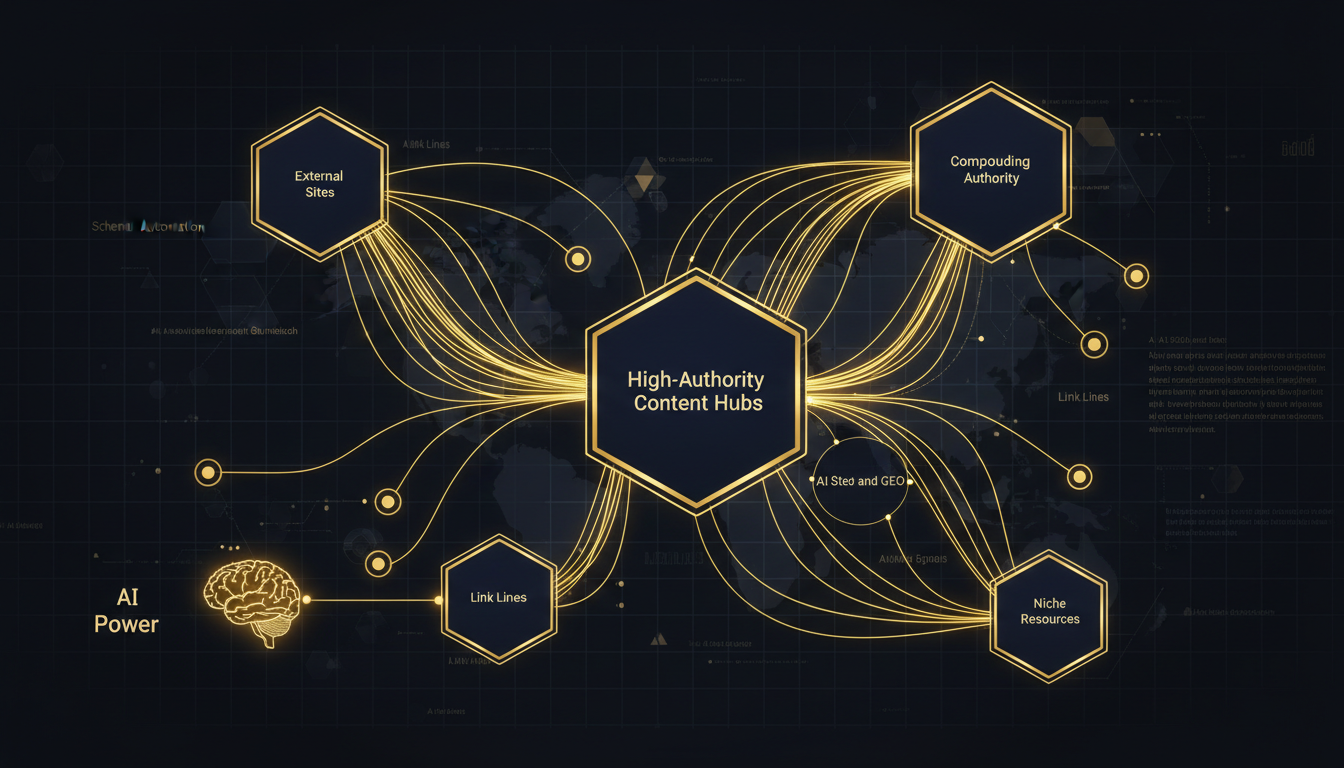
Building a scalable SEO link building strategy is one of the most misunderstood disciplines in organic search. Most teams either chase volume with low-quality tactics that erode trust, or they produce great content and wait passively for links that never arrive. Neither approach compounds. What scales in 2026 is a systematic, content-led acquisition model powered by AI-assisted outreach, a deliberate anchor text strategy, and digital PR relationships that generate recurring authority signals—not one-off placements.
Quick answer: An SEO link building strategy that scales in 2026 combines three layers: (1) linkable asset creation—original research, comprehensive guides, and free tools that earn citations naturally; (2) AI-assisted outreach that identifies topically relevant, high-authority prospects from competitor backlink gaps and personalizes pitches at volume without sacrificing quality; and (3) digital PR that converts brand mentions and editorial relationships into durable, high-trust backlinks. The goal is not raw link count but topical authority—a cluster of contextually relevant, trusted domains signaling to Google that your content deserves to rank. Quality and relevance consistently outperform volume.
Why Most Link Building Strategies Fail to Scale
The failure mode is almost always the same: teams treat link acquisition as a one-time campaign rather than a compounding system. They buy a list, send a batch of identical outreach emails, land a handful of mediocre placements, and declare the quarter done. Then they start over.
This approach has two fatal flaws. First, it ignores topical relevance—Google's ability to evaluate whether a linking domain is contextually related to your content has improved significantly. A link from a high-authority domain in an unrelated niche contributes far less than a link from a mid-authority site that covers your exact topic. Second, it treats content and link building as separate workstreams when they are inseparable. Links follow content worth linking to.
A scalable strategy treats backlink acquisition as the downstream result of upstream content investment, amplified by systematic outreach and relationship infrastructure.
What Matters Most: The Decision Framework
Before choosing tactics, align your strategy to these four variables:
- Topical relevance: Does the linking domain cover subjects adjacent to yours?
- Domain authority and trust: Is the site indexed, crawled regularly, and free from spam signals?
- Anchor text diversity: Does your existing backlink profile reflect natural editorial language?
- Content-link fit: Is the asset you're promoting genuinely worth referencing?
Every tactic below should be evaluated against these four criteria before you invest time in it.
Building the Content Foundation for Sustainable Link Acquisition
Create Assets That Earn Links Without Asking
The most durable links come from content that solves a problem no other page solves as well. In practice, this means:
- Original data and research: Proprietary surveys, aggregated datasets, or platform-specific benchmarks that journalists and bloggers need to cite.
- Comprehensive reference guides: Definitive, regularly updated resources that become the canonical answer to a question in your niche.
- Free tools: Calculators, generators, and diagnostic tools that practitioners bookmark and share. (See the free SEO tools available without signup as an example of this format in action.)
The Google helpful content guidance is explicit: content created primarily for search engines rather than people underperforms. Linkable assets work precisely because they are genuinely useful—which is also why they satisfy E-E-A-T signals that influence how Google weights the links pointing to them.
Content Briefs Accelerate Linkable Asset Production
Producing linkable assets at scale requires a repeatable brief format that bakes in the structural elements—original angles, data hooks, expert quotes, and FAQ sections—that make content citable. AI-powered content briefs reduce the time from keyword to publishable draft while ensuring each piece is built around the topical depth that attracts editorial links rather than thin content that earns none.
How to Build an SEO Link Building Strategy With AI-Assisted Outreach
Identifying High-Value Prospects at Scale
Manual prospect research is the bottleneck that prevents most link building from scaling. AI changes this by automating the most time-consuming steps: crawling competitor backlink profiles, identifying topically relevant domains your content could earn links from, and flagging unlinked brand mentions that can be converted with a simple email.
The most efficient starting point is a competitor backlink gap analysis. Find domains that link to two or more of your competitors but not to you—these sites have already demonstrated willingness to link to content in your niche. AI competitor analysis for SEO content gaps covers this methodology in detail, including how to prioritize prospects by authority and topical alignment rather than raw domain metrics.
Personalizing Outreach Without Losing Volume
Generic outreach fails because editors receive hundreds of pitches weekly. Personalization is the differentiator, but manual personalization at scale is impossible. AI-assisted outreach solves this by generating pitch variations based on the prospect's recent content, linking patterns, and audience—then A/B testing subject lines and angles automatically.
The full workflow for scaling this process—from prospect list building to follow-up sequencing—is covered in how to scale backlink outreach with AI. The key principle: AI handles research and personalization at volume; humans review and approve before sending. This preserves quality while removing the manual ceiling.
Digital PR as a Scalable Link Building Channel
Digital PR is the highest-leverage link building channel available because it generates links from news sites, industry publications, and authoritative blogs that are otherwise nearly impossible to reach through cold outreach. The mechanics are straightforward: create a newsworthy data asset or expert commentary, pitch it to journalists covering your topic, and earn editorial coverage that includes a backlink.
What makes digital PR scalable is the relationship infrastructure. A single journalist relationship can generate recurring coverage across multiple campaigns. A well-placed data study can earn dozens of links from secondary coverage as other publications pick up the story.
The Google SEO Starter Guide frames this correctly: links that come naturally from editorial decisions by independent sites are the ones that carry the most weight. Digital PR is the systematic way to earn exactly those links.
Anchor Text Strategy: The Detail Most Teams Get Wrong
| Anchor Type | Recommended Mix | Risk if Overused |
|---|---|---|
| Branded (e.g., "Black & Gold SEO") | 40–50% | Low |
| Partial match (e.g., "SEO platform for agencies") | 20–30% | Moderate |
| Generic (e.g., "read more," "this guide") | 15–20% | Low |
| Exact match keyword | 5–10% | High if over-concentrated |
| Naked URL | 5–10% | Low |
A natural anchor text profile signals to Google that links were placed editorially, not manufactured. Over-optimized exact-match anchors remain one of the clearest signals of manipulative link building. Audit your existing profile before launching new outreach—if exact-match anchors already dominate, prioritize branded and generic anchors in new placements until the distribution normalizes.
Keyword Research as a Link Building Input
Link building and keyword research are not separate strategies. The keywords you target determine which content assets you build, which in turn determines which sites are likely to link to you. AI keyword research for high-intent topics competitors miss explains how to identify underserved angles that have both ranking potential and link acquisition potential—the intersection where content investment compounds fastest.
Measuring What Actually Matters
Vanity metrics—total backlinks, domain authority score—are easy to game and poor proxies for organic growth. Measure instead:
- Referring domain growth from topically relevant sites (not total link count)
- Organic traffic to linked pages before and after acquisition
- Ranking movement for target keywords on pages receiving new links
- Share of voice in your topic cluster relative to competitors
For agencies managing multiple clients, consolidating these metrics into executive-ready reporting is essential. The best SEO software for agencies covers platforms that unify backlink tracking, rank monitoring, and reporting in a single workflow.
Frequently Asked Questions
What is the most effective link building strategy in 2026?
The most effective link building strategy in 2026 combines content-led acquisition—creating genuinely linkable assets like original research, tools, and comprehensive guides—with AI-assisted outreach that personalizes pitches at scale and targets topically relevant, high-authority domains.
How do I scale link building without using black-hat tactics?
Scale link building ethically by systematizing content production around linkable formats (data studies, expert roundups, free tools), automating prospect research and outreach personalization with AI, and building digital PR relationships that generate recurring coverage rather than one-off links.
How many backlinks do I need to rank on the first page of Google?
There is no universal number. What matters is the topical authority, relevance, and trust of linking domains relative to your competitors. A handful of links from highly authoritative, contextually relevant sites often outperforms hundreds of low-quality links.
Does anchor text still matter for link building in 2026?
Yes. A natural anchor text profile—mixing branded, partial-match, and generic anchors—signals authenticity to Google. Over-optimized exact-match anchors remain a risk factor. Aim for diversity that reflects how real editors naturally reference your content.
How can AI help with link building outreach?
AI can accelerate link building by identifying high-authority prospects from competitor backlink gaps, personalizing outreach emails at scale, drafting pitch variations for A/B testing, and monitoring unlinked brand mentions that can be converted into backlinks with a simple request.
Sources and Further Reading
The practical next step is an audit of your current backlink profile: identify your topical coverage gaps, map which content assets you're missing that competitors are earning links from, and build one linkable asset this quarter designed specifically to close that gap. That single cycle—audit, create, outreach, measure—is the repeatable unit that compounds into a scalable SEO link building strategy over time.
← All posts